
Best Miniature Painting Tools for Beginners 2026: What Do You Need?
Last Updated: October 26, 2026
Quick Summary
The best miniature painting tools for beginners in 2026 are a short list: one matt grey primer, a size 1 round and size 0 detail brush, three to five acrylic colors plus a wash ink, a wet palette, clippers, a hobby knife, a sanding stick, and brush soap. This minimum kit gets you through a first squad without wasted purchases.
- An entry-tier starter kit typically costs $55-$85 and covers primer, brushes, paints, a wet palette, and prep tools.
- A size 1 round brush does most miniature work; skip tiny 000 brushes that dry out in seconds.
- Never store brushes tip-down in water, because the weight bends bristles and curls the tip within days.
- Prime in two thin passes from about 15-20 cm away; one heavy coat fills detail and creates grainy texture.
- Skip the 36-color mega set, since half those bottles dry out before you open them.
Table of Contents
- The Beginner Minimum: What You Actually Need First
- Building a Miniature Painting Starter Kit at Three Budget Tiers
- Best Miniature Paint Brushes for Beginners: Sizes, Shapes, and Care
- Paint Sets and Essential Colors: What to Buy and What to Skip
- Why a Wet Palette for Miniature Painting Changes Your Results
- Tools for Cleaning and Assembling Miniatures: Knives, Clippers, Glue, and Putty
- Priming and Surface Preparation: The Step Beginners Rush
- Safety, Maintenance, and the Mistakes That Cost Beginners Money
- Frequently Asked Questions
The Beginner Minimum: What You Actually Need First
The best miniature painting tools for beginners in 2026 are not a giant kit of miniature painting tools. They are a short list: one primer, two or three brushes, a handful of acrylic colors, a wet palette, and a way to clean mold lines before paint ever touches the model. Everything else is an upgrade you earn later.
The tool mix matters more than the tool count. A painter with a grey primer, a size 1 round brush, and three colors will finish a better model than someone with a full paint rack and no brush control.
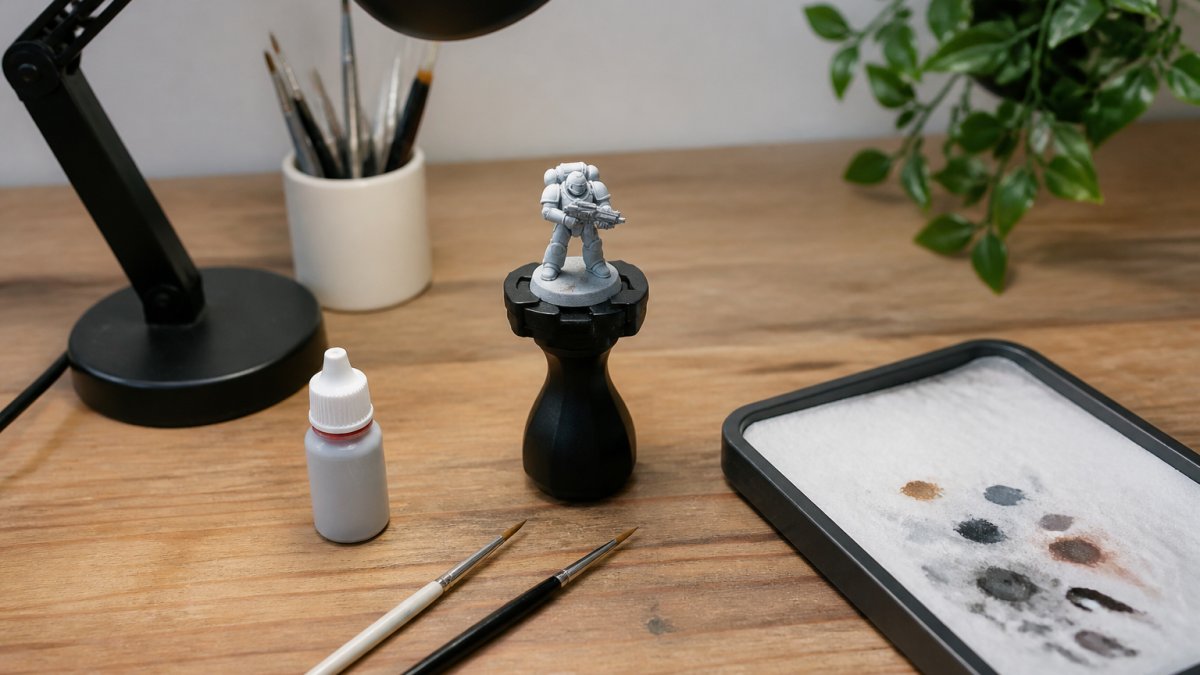
Here is the minimum kit we would hand a total beginner:
- One matt surface primer in grey
- Two brushes: a size 1 round and a size 0 detail brush
- Three to five acrylic colors plus one wash ink
- A wet palette
- Hobby clippers, a hobby knife, and a sanding stick
- Brush soap
That list gets a beginner through a first squad without a single wasted purchase.
Building a Miniature Painting Starter Kit at Three Budget Tiers
A miniature painting starter kit scales by tier, not by brand. The entry tier covers the essentials. The mid tier adds a proper detail brush and a wash ink set.
| Tier | What's Included | Typical U.S. Price Band | Best For |
|---|---|---|---|
| Entry | Primer, 2 synthetic brushes, 3-5 acrylic colors, 1 wash ink, wet palette, clippers, hobby knife, sanding stick, brush soap | $55-$85 | First squad, testing the hobby |
| Mid | Entry kit plus a size 0 detail brush, an 8-color wash ink set, putty, and a painting handle | $110-$160 | Regular painting, better shading |
| Upper | Mid kit plus an airbrush, compressor, and magnification lamp | $260-$420 | Batch painting, terrain, display pieces |
Entry tier, itemized. A rattlecan matt grey primer runs about $12-$18. Two synthetic rounds (size 1 and size 0) run $6-$12 each. Three to five 17ml acrylic bottles run $4-$7 each. A single wash ink runs $5-$8.
Lower-cost alternatives. A plastic takeout lid with a folded paper towel and parchment paper makes a serviceable wet palette for under $5.
What to postpone. Skip the airbrush and compressor until you are painting more than a squad at a time; they add cleanup and a learning curve that slows a first project.
What not to postpone. Do not skip primer, brush soap, or a wet palette.
The jump from entry to mid is where results change most.
Best Miniature Paint Brushes for Beginners: Sizes, Shapes, and Care
The best miniature paint brushes for beginners are a size 1 round and a size 0 round, both synthetic, plus one cheap brush reserved for metallics and primer.
Shapes and what they do. A round brush is the workhorse: basecoats, layering, and detail all come from the same tip. A flat brush covers large areas and drybrushes well.
How size, paint, and model material work together. Thin acrylic paint flows off a size 1 round and levels before it dries, which is why the size suits basecoats and layers.
Brush control comes from the tip, not the size. Beginners often buy a tiny 000 brush thinking it gives precision. It dries out in seconds and forces repeated dipping, which ruins control.
Synthetic versus natural. Synthetic bristles suit water-based acrylics, hold up to repeated washing, and cost less.
Lifespan and replacement. A synthetic round used several times a week and cleaned after every session typically holds a usable point for a few months before the tip curls or splits.
Brush care is the other half of the equation. Rinse between color changes, then work a small amount of brush soap into the bristles at the end of every session and reshape the tip.

Paint Sets and Essential Colors: What to Buy and What to Skip
A paint set should cover basecoating, shading, and a metallic, not every color on the color wheel. Beginners need a black, a white, a skin tone, a leather brown, a green or blue for armor, and one metallic. That is the whole essential palette for a first project.
Skip the 36-color mega set. Half those bottles dry out before you open them, and matching a color across a squad is harder when you have too many near-duplicates. Buy singles from a water-based acrylic line and add colors as projects demand them.
Green Stuff World Acrylic Wet Palette →
Chalky finishes come from thick paint and poor surface preparation. Best Miniature Paints for Beginners: How to Avoid Chalky Finishes covers prep, thin layers, and wet palettes in more depth.
Wash inks deserve their own line item. A single black or sepia wash settles into recesses and adds instant shading, which is the fastest way a beginner's model starts looking finished.
Why a Wet Palette for Miniature Painting Changes Your Results
A wet palette for miniature painting keeps acrylic paint workable for hours instead of minutes. The palette holds a damp sponge under a semi-permeable membrane, so paint draws moisture from below and stays thin enough to layer without drying on the brush.
The practical effect is control. Thinning paint on a dry palette means constantly adding water and guessing at consistency. On a wet palette, the paint finds its own working consistency and holds it. Glazing and color transitions become possible for a beginner within the first session.
Shop the Green Stuff World Acrylic Wet Palette if you want to test the difference on your next model. It is the single accessory we would add before any second brush.

Tools for Cleaning and Assembling Miniatures: Knives, Clippers, Glue, and Putty
Tools for cleaning and assembling miniatures do three jobs: cut parts from the sprue, remove mold lines, and fill gaps. Plastic clippers cut the part free. A hobby knife shaves the remaining nub flush. Files and sanding sticks smooth mold lines on flat surfaces where a blade would gouge the plastic.
Assembly comes next. Cyanoacrylate glue bonds most miniature materials with a fast set, and a precision applicator keeps the bond clean. Gaps at the join, and layer lines on printed parts, need putty. Green Putty fills seams and surface imperfections, then cures before sanding and priming.
Watch out: always cut away from your body with a fresh blade, and never pry with the tip. A dull blade slips, and a snapped tip is the most common beginner injury in this hobby.
Priming and Surface Preparation: The Step Beginners Rush
Priming is the step beginners rush, and it is the step that decides whether paint sticks. Primer gives acrylic a surface to grip. Skip it and paint beads, pulls away from edges, and rubs off during handling.
Surface preparation starts before the primer can. Wash resin and 3D printed parts to remove release agent and residue, let them dry fully, then prime in thin passes from about 15-20 cm away. One heavy coat fills detail and creates a rough, grainy texture that no amount of thinning will fix. Two light passes beat one wet pass every time.
A water-based matt primer works through a brush or an airbrush, which matters for painters without outdoor spray space. Matt Surface Primer comes in black, white, and grey. Grey is the safest first choice because it shows detail and accepts both light and dark colors.

Safety, Maintenance, and the Mistakes That Cost Beginners Money
Most beginner money is lost to three mistakes: buying too many paints, skipping brush care, and painting without primer. Each one is avoidable, and each one compounds. A neglected brush gets replaced. Unprimed paint gets stripped. A paint remover fixes the last one, but stripping and repainting costs more time than the primer ever would have.
Safety matters as much as budget. Ventilate when spraying primer or using cyanoacrylate glue, keep glue off skin, and wear eye protection when clipping or sanding. Store blades capped and out of reach.
Maintenance is a routine, not a purchase. Clean brushes after every session, rinse the wet palette membrane, and check that paint bottles are sealed. Total cost of ownership drops sharply once a beginner stops replacing ruined brushes and dried-out paint.
Skip if: you plan to paint one model and stop. The entry tier is enough, and nothing above it pays back.
The difference between a beginner who quits and one who keeps painting usually comes down to the first ten models, and the tools that made them possible. Pewgilist stocks a curated range of Green Stuff World paints, primers, putty, and brush care so your setup works from the first miniature. Our how-to guides walk you through prep, thinning, and shading in plain language, and our custom 3D printing service covers the parts your project needs. Get started with Pewgilist and build a starter kit that grows with your skill instead of holding it back.
Frequently Asked Questions
What are the essential miniature painting tools a beginner should buy first?
Start with four things: a primer, two or three acrylic paints, one or two brushes, and a way to hold the model. A water-based matt primer like Green Stuff World's 60ml bottle ($8.99) gives acrylics a surface to grip. Add a base color and a wash ink, then a detail brush. Clippers and a hobby knife come next if you are assembling kits. Everything else, including a wet palette and metallic paints, can wait until your first model is finished.
Do beginners need a wet palette for miniature painting?
Not strictly, but it solves the most common beginner problem: paint drying on the palette before you finish a section. A wet palette keeps acrylics workable longer and reduces wasted paint during extended sessions. The Green Stuff World Acrylic Wet Palette is $15.99, which is less than a single replacement pot of paint over a few months. If you paint in short 20-minute bursts, a ceramic tile or plastic lid works fine at first.
Which paint brushes should a beginner use for miniatures?
Two brushes cover most early work: a size 1 or 2 round for basecoating and a size 0 round for detail. Avoid cheap multi-packs with huge brush heads; brush control matters more than brush count. Kolinsky sable is expensive and unnecessary while you are learning. A synthetic round holds a point well and survives mistakes. Clean it with brush soap after every session, because dried acrylic in the ferrule is what kills beginner brushes.
What tools do you need to prepare a miniature for painting?
You need clippers to cut parts from the sprue, a hobby knife to scrape remaining nubs, and a file or sanding stick to smooth mold lines. Green Stuff World's cyanoacrylate glue ($7.99) handles assembly, and green putty ($5.99) fills gaps at joins. After assembly, wash the model in warm soapy water to remove mold release agent, let it dry fully, then prime. Skipping the wash or the primer is the fastest way to watch paint bead up and flake off.
How much should a complete beginner setup cost?
A working setup runs roughly $50 to $60 if you buy only what you need. That covers primer ($8.99), three acrylic colors at $4.49 each, a wash ink ($4.99), a wet palette ($15.99), and brush soap ($3.99). Add clippers, a knife, and glue and you are near $80. You do not need an airbrush, a full paint range, or a magnifying lamp to paint your first ten models well.
