
Best Professional Paints for Tabletop Figures
Table of Contents
- What Makes Professional Paints Different for Tabletop Figures
- Essential Tools for Painting Tabletop Minis
- How to Thin Acrylic Paints for Miniatures
- Heavy Body vs. Fluid Consistency: Choosing the Right Paint Type
- Pigment Density and Color Saturation in Professional Paints
- Quick Comparison: Paint Types and Applications
- Conclusion
- Frequently Asked Questions
Last Updated: October 2, 2026
What Makes Professional Paints Different for Tabletop Figures
The difference between amateur and professional results on tabletop figures comes down to using the best professional paints for tabletop figures, which deliver superior quality and consistency. Professional paints for tabletop figures are formulated specifically for miniature work, they deliver better pigment density, finer coverage, and more predictable layering than generic craft acrylics.
Professional formulations thin smoothly, dry predictably, and maintain color saturation through multiple layers without chalking or streaking.
Here's what separates the pros: pigment load. Professional paints pack more actual pigment into each milliliter, meaning you need fewer coats to achieve solid coverage. A single layer of quality paint covers what might take two or three coats of cheaper alternatives. That saves time, reduces the risk of obscuring fine details, and gives you more control over opacity and color saturation across your miniature.
The binder, the acrylic emulsion that holds pigment particles together, matters too. Professional formulations use higher-quality binders that create a more flexible film as it dries. This means less cracking, better adhesion to primers, and paint that won't flake off when you handle your finished figure.
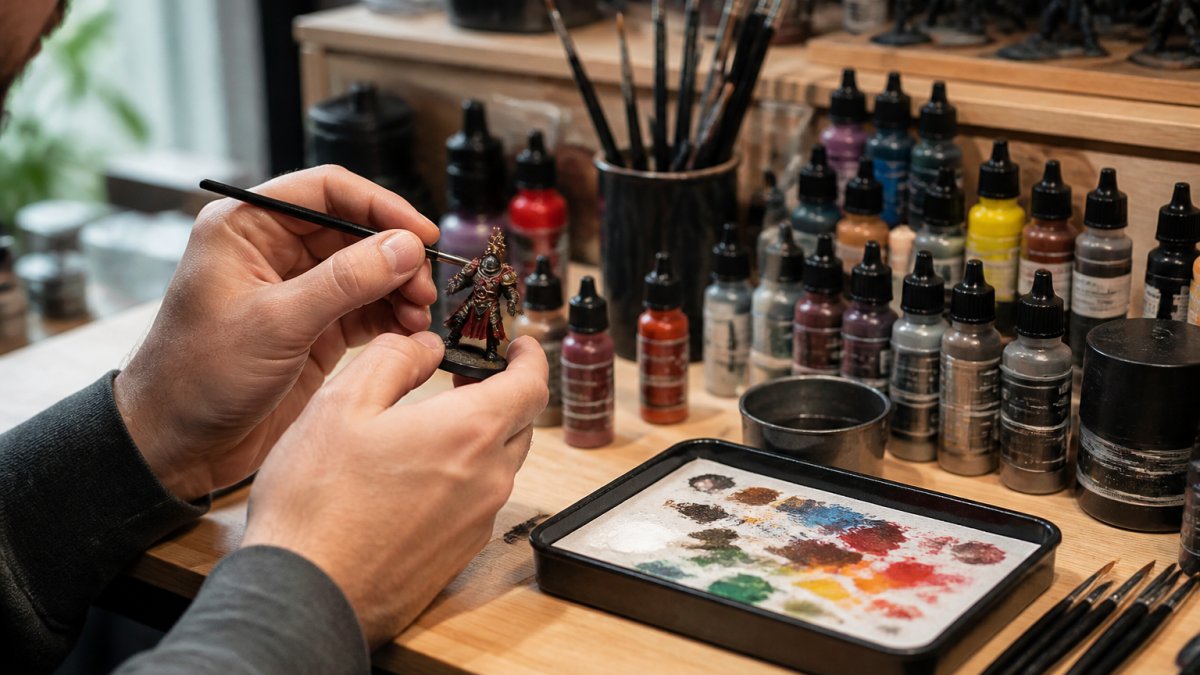
Essential Tools for Painting Tabletop Minis
Painting tabletop figures requires more than just paint. The right tools and accessories transform the process from frustrating to fluid.
Primers and Base Coats
A primer is non-negotiable. It creates the foundation that determines whether your paint adheres properly and maintains consistent coverage across the figure. The ASTM International standards for paint adhesion emphasize surface preparation as the critical first step in any painting process.
The Green Stuff World Matt Surface Primer at $8.99 per 60ml bottle is formulated specifically for miniatures and 3D prints. It comes in black, white, and grey, giving you options based on your color scheme. Matt finish means your base coat won't fight your colors.

Apply primer in thin, even coats. Two light coats beat one heavy coat; heavy primer obscures fine details.
Washes and Glazes
Washes add depth and definition with minimal effort. A wash is highly thinned paint that flows into recesses and settles in shadows, creating natural shading automatically.
The Green Stuff World Wash Ink is specifically designed for this. Unlike regular paint thinned with water, wash ink has a flow improver built in, moving across the figure and settling where needed. Common washes include brown (for leather, wood, skin), black (for armor, metal), and blue (for shadows on cool tones).
Apply washes over a completely dry basecoat. The wash should be thin enough to flow freely but concentrated enough to create visible shadow.
Metallic and Special Effect Paints
Metallic finishes elevate tabletop figures from good to gallery-quality. The Green Stuff World Metallic Paint delivers crisp, reflective metal finishes for weapons, armor, and trim. Apply in thin, smooth coats;
The Green Stuff World Chrome Paint creates a polished, mirror-like finish for display pieces and focal points. Apply in multiple thin coats over a glossy black base to achieve maximum reflectivity.
The Green Stuff World Chameleon Colorshift Paint changes color as light and viewing angle shift, ideal for fantasy armor and vehicles. Apply over a glossy black base for the strongest effect.
The Green Stuff World Fluorescent Paint delivers intense, glowing colors for sci-fi and high-impact details. Apply over white or a light base to achieve maximum intensity.
How to Thin Acrylic Paints for Miniatures
Thinning paint is the single most important skill for tabletop figure painting. Unthinned paint sits thick on the figure, obscures details, and dries with visible brush strokes. Properly thinned paint flows smoothly, builds color gradually through layers, and maintains fine detail definition.
The goal is "milk consistency", paint that flows like milk when you brush it on.
Use a wet palette to thin your paint. The Green Stuff World Acrylic Wet Palette keeps paint workable for hours by maintaining moisture. Pour a small amount of paint onto the palette, then add water drop by drop while stirring with your brush.
Green Stuff World Acrylic Color Paint – 17ml →

Overly thinned paint becomes translucent. The balance point is usually two thin coats for solid coverage without losing detail.
Fluid acrylics thin more easily than heavy body paints.
Test your consistency on a scrap piece before applying to your figure. It should flow smoothly without pooling or beading.
Heavy Body vs. Fluid Consistency: Choosing the Right Paint Type
Professional paints come in different viscosities. Each has distinct advantages depending on your technique and what you're painting.
Heavy body acrylics are thicker and ideal for dry brushing, a technique where you load minimal paint on your brush and drag it across raised surfaces to create highlights.
Fluid acrylics flow more easily and are ideal for basecoats, washes, glazing, and wet blending.
The Green Stuff World Acrylic Color Paint is formulated as a fluid consistency, making it ideal for basecoats and layering.

| Paint Type | Consistency | Best For | Coverage Per Coat | Drying Time |
|---|---|---|---|---|
| Fluid Acrylic | Flows easily | Basecoats, layering, glazing | 1-2 coats for solid coverage | 15-30 minutes |
| Heavy Body | Thick, textured | Dry brushing, highlights, texture | 1 coat often sufficient | 20-45 minutes |
| Metallic | Medium-thick | Metal details, reflective surfaces | 2-3 thin coats recommended | 30-60 minutes |
| Wash Ink | Very thin, flowing | Shadows, recesses, shading | Builds depth gradually | 10-20 minutes |
Pigment Density and Color Saturation in Professional Paints
Pigment density is the concentration of actual color particles in the paint. Higher pigment density means more intense color, better coverage, and fewer coats needed.
High pigment density paint appears vibrant and saturated even when thinned.
Quick Comparison: Paint Types and Applications
Different paint types serve different purposes on your tabletop figure. Knowing when to use each one separates amateur work from professional results.
| Purpose | Product | Price | Key Benefit |
|---|---|---|---|
| Base Coating | Green Stuff World Acrylic Color Paint | $4.49 | High pigment density, smooth thinning |
| Metal Details | Green Stuff World Metallic Paint | $5.50 | Crisp reflective finish |
| Shading & Depth | Green Stuff World Wash Ink | $4.99 | Flows into recesses automatically |
| Glowing Effects | Green Stuff World Fluorescent Paint | $4.49 | Intense color over light base |
| Color-Shifting Armor | Green Stuff World Chameleon Colorshift Paint | $5.99 | Angle-dependent color change |
| Mirror Finish | Green Stuff World Chrome Paint | $6.99 | Polished, reflective surface |
| Foundation | Green Stuff World Matt Surface Primer | $8.99 | Ensures adhesion and even coverage |
| Wet Blending | Green Stuff World Acrylic Wet Palette | $15.99 | Keeps paint workable for hours |
| Brush Maintenance | Green Stuff World Brush Soap | $3.99 | Protects bristles, extends tool life |
| Correction | Green Stuff World Paint Remover | $11.99 | Strip and restart when needed |
Conclusion
Choosing the best professional paints for tabletop figures is the single biggest lever for improving your results. Better pigment density, consistent viscosity, and formulations designed for miniature work eliminate the frustration of cheap paint and let you focus on technique.
Frequently Asked Questions
What is the difference between hobby acrylics and professional paints for tabletop figures?
Professional paints for tabletop figures contain higher pigment density and superior binders, delivering better color saturation and coverage than hobby-grade alternatives. This means fewer coats needed and more vibrant results. Professional formulations also offer better flow, layering properties, and consistency control, critical for detail work on small miniatures. While hobby acrylics work for beginners, professional paints reward skill with smoother blending, glazing, and wet-blending capabilities.
Do I need to prime my miniatures before using professional paints?
Yes, priming is essential. A primer like Green Stuff World Matt Surface Primer ($8.99) creates an even surface that helps professional acrylic paints adhere consistently and perform at their best. Primer adhesion directly affects how smoothly paint applies and how long your work lasts. Without primer, paint can chip or peel, especially on 3D-printed figures. Use black, white, or grey primer depending on your color scheme and desired opacity.
How do I thin professional paints for miniatures without losing quality?
Thin professional acrylic paints with distilled water or a flow improver to achieve the consistency of milk. Start with a wet palette (like Green Stuff World Acrylic Wet Palette, $15.99) to keep paints workable and control thinning. For layering, thin to a 1:1 ratio of paint to water; for glazing, go thinner. Never over-thin, as it reduces pigment load and coverage. Professional paints thin smoothly without becoming chalky when you use the right ratio.
Are professional paints worth the extra cost for beginners?
Professional paints cost more upfront but deliver better results faster. Beginners benefit from superior flow and layering properties that make blending and detail work easier. Starting with quality paints builds good habits and prevents the discouragement of poor coverage or muddy colors. Consider it an investment in skill development, not just paint.
What paint types should I use for different tabletop figure techniques?
Use base coat paints (like Green Stuff World Acrylic Color Paint, $4.49) for solid coverage on large areas. Apply wash inks (Green Stuff World Wash Ink, $4.99) over dry basecoats to add shadows and depth in recesses. Layer with thinned color paints for highlights and blending. Use metallic paints (Green Stuff World Metallic Paint, $5.50) for weapons and armor, and special effects like chrome ($6.99) or chameleon colorshift ($5.99) for standout details. Each type serves a specific stage in the painting process.
Ready to elevate your miniature painting? Pewgilist carries the complete Green Stuff World professional paint system, from primers and base coats to specialty effects and maintenance tools. Every product is selected to deliver professional results for tabletop figures. Shop now and discover why serious painters choose professional-grade paints.