
Cost of Custom 3D Printed Parts: Complete Breakdown
Table of Contents
- What Determines the Cost of Custom 3D Printed Parts
- Factors Affecting 3D Printing Cost: The Core Variables
- 3D Printing Material Comparison: How Choice Impacts Price
- Post-Processing 3D Print Costs: What Happens After Printing
- Batch Size and Economies of Scale
- Real-World Cost Examples and Pricing Breakdown
- In-House Printing vs. Outsourcing: Cost Trade-Offs
- Conclusion
- Frequently Asked Questions
Last Updated: October 5, 2026
What Determines the Cost of Custom 3D Printed Parts
Understanding the cost of custom 3D printed parts requires looking beyond the headline price. At Pewgilist, we know that what you pay depends on a surprising number of moving parts. The final invoice reflects material, machine time, design complexity, post-processing, and production volume, each one pulling the total in different directions.
When you request a quote for a custom part, you're really asking several questions at once: How much material will this use? How long will it take to print? What happens after the print finishes? How many copies do you need? Each answer shifts the price. A small prototype in standard PLA costs vastly less than a batch of 50 metal parts with tight tolerances.

The cost of custom 3D printed parts isn't random. It follows predictable logic once you know what to look for.
Factors Affecting 3D Printing Cost: The Core Variables
The cost of custom 3D printed parts comes down to five core factors that compound together. Material selection sets the baseline. Print time determines machine use. Part geometry and design complexity affect both material waste and post-processing labor. Batch size creates economies of scale. And the technology you choose, FDM, resin, or metal, reshapes everything else.
Material Selection and Per-Part Material Cost
Your material choice is often the first cost lever. A 1 kg spool of quality filament like ELEGOO PLA Filament 1 kg - Black or NextShapes PETG HF from Pewgilist runs $13.99, making per-part material cost quite predictable for small objects.


But material cost isn't just about the spool price. Waste matters. Support structures, failed prints, and design inefficiencies all add material that never makes it into your final part. A poorly oriented print might use 40% more filament than an optimized one.
The material you pick also determines whether your part meets your functional requirements. PETG offers better durability and heat resistance than PLA, which justifies the same per-kilogram cost when the application demands it. Specialty materials like nylon or carbon-fiber-reinforced filament cost more but deliver strength that cheaper materials cannot match.
Print Time and Machine Time
Print time is the second major cost driver, especially in professional settings where machine use directly affects pricing. A small part might print in 30 minutes; a larger prototype could take 8 hours or more. That machine time represents not just electricity but also opportunity cost, while one job runs, the printer cannot start another.
In-house printing makes print time a sunk cost once you own the equipment. Outsourcing, however, charges for machine time explicitly. A service provider calculates hourly rates and factors in machine maintenance, calibration, and downtime. Faster print speeds reduce costs, but they often sacrifice surface quality or structural integrity.
Orientation and slicing strategy matter more than most makers realize. Printing a part flat versus at an angle can change print time by 30% or more. Angled prints reduce support material but may require more post-processing. Flat prints print faster but generate more waste.
Part Geometry and Design Complexity
Design complexity is where geometry and cost collide. A simple cube prints cheaply. A part with thin walls, intricate features, overhangs, or internal cavities demands more support material, longer print times, and greater risk of failure. Overhangs require support structures that must be removed by hand, labor that scales with complexity.
Tolerance requirements amplify this effect. A decorative part tolerates loose dimensions. A functional part that must fit into an assembly demands precision. Achieving tight tolerances on FDM printers requires slower print speeds, better material (often PETG rather than PLA), and post-processing finishing like sanding or reaming. That precision work is manual, expensive, and time-consuming.
Wall thickness is a hidden cost multiplier. Thin walls use less material but fail more often. Thick walls print reliably but waste material. The optimal thickness balances strength, print reliability, and material efficiency, and it differs by technology and material.
3D Printing Material Comparison: How Choice Impacts Price
FDM vs. Resin vs. Metal Printing
FDM (Fused Deposition Modeling) remains the most affordable technology for custom 3D printed parts. Materials cost $10-$30 per kilogram, printers range from $200 to $5,000, and per-part costs for small runs stay low. The trade-off is surface finish, FDM parts show layer lines unless post-processed.
Resin printing (SLA and DLP) delivers superior surface finish and detail but costs more. Resin materials run $30-$80 per liter, and a single print job consumes less volume than FDM but at higher per-milliliter cost. Post-processing requires isopropyl alcohol washing and UV curing, adding labor. The result looks polished without sanding, which appeals to miniature painters and creators needing fine detail.
Filament Options for FDM Printing
Within FDM, filament choice directly affects cost and performance. Standard PLA and PETG are commodity materials, multiple manufacturers, consistent pricing, predictable behavior. A 1 kg spool costs around $13.99 from quality suppliers like Pewgilist.
Specialty filaments command premiums. Silk PLA, which delivers a lustrous finish prized by miniature painters and display makers, typically costs $15-$25 per kilogram depending on brand and color. Each material requires different print temperatures, speeds, and sometimes hardware upgrades (hardened nozzles for abrasive composites).
The cost premium for specialty materials only makes sense if your design requires their properties. Silk PLA's aesthetic appeal justifies higher cost for display pieces and miniatures. Carbon fiber justifies cost for structural parts. Standard PLA or PETG handles 80% of hobby and prototype work, making them the smart default choice.
Post-Processing 3D Print Costs: What Happens After Printing
Raw prints rarely look finished. Post-processing adds cost that many makers underestimate. Support removal is manual labor, someone sits with a utility knife or pliers and removes structures by hand. Depending on complexity, this can take minutes or hours per part.
Surface finishing includes sanding, priming, painting, and polishing. A rough FDM part sanded smooth might require three grits of sandpaper and several hours of labor. Resin parts need less sanding but still benefit from polishing.
Chemical post-processing applies to resin prints. Washing in isopropyl alcohol removes uncured resin, then UV curing hardens the part fully. Both steps require materials and equipment.
NextShapes Standard PLA 1.75mm – 1KG →
Many makers skip post-processing to save money and time, accepting rough surfaces. Outsourced services often include basic finishing in their quoted price. In-house printing pushes finishing costs onto you, a hidden expense that catches many makers off guard.
Batch Size and Economies of Scale
Print one part, and your costs per unit stay high. Print 50, and costs drop dramatically. This is the power of batch printing and economies of scale.
In-house printing benefits from batch efficiency. Once your printer is running, adding a second or third part to the build platform costs almost nothing in machine time.
Outsourced printing inverts this logic. A service provider quotes per-job or per-hour rates. Running 10 parts at once might cost only 20% more than running one, since setup time, design review, and machine time scale differently.
At higher volumes (100+ parts), injection molding or other traditional manufacturing often beats 3D printing on per-unit cost. But 3D printing wins on flexibility, you can iterate designs, make one-off customizations, or test variations.
Real-World Cost Examples and Pricing Breakdown
Let's walk through realistic scenarios to see how these factors combine. Assume FDM printing with standard PLA from a service provider.
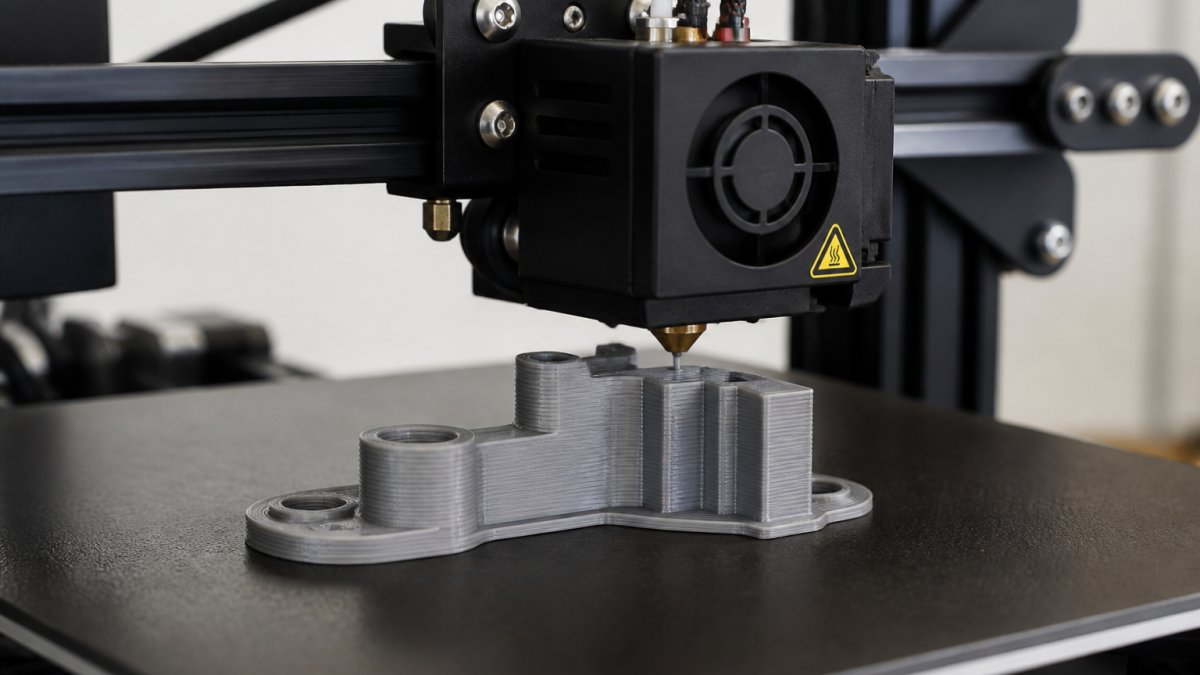
Scenario 1: Small Prototype (10 cm cube, single unit)
- Material cost: ~15 grams of PLA = $0.20
- Print time: 2 hours at $20/hour machine rate = $40
- Support removal and light finishing: 15 minutes at $30/hour labor = $7.50
- Service overhead and profit margin: ~$15
- Total: ~$62-$75
Scenario 2: Batch of 20 Small Parts (5 cm each, same design)
- Material cost: 20 × 5 grams = 100 grams = $1.30
- Print time: 8 hours for all 20 = $160
- Support removal: 30 minutes total = $15
- Overhead: $25
- Total: ~$200-$210 ($10-$11 per part)
Scenario 3: Complex Part with Tight Tolerances (8 cm, single unit, PETG)
- Material cost: ~40 grams of PETG = $0.55
- Print time: 5 hours at $20/hour = $100
- Support removal and finishing: 1 hour = $30
- Tolerance verification and rework risk: $20
- Overhead: $20
- Total: ~$170-$180
These examples show how batch size and complexity shift costs nonlinearly. The per-unit cost in Scenario 2 is roughly one-fifth of Scenario 1, even though the total material cost barely changes. Complexity and tight tolerances in Scenario 3 double the cost of a larger part compared to a simpler one.
In-House Printing vs. Outsourcing: Cost Trade-Offs
The decision to buy a printer and print in-house versus outsourcing each job hinges on volume, complexity, and your time value.
In-house printing makes sense if you:
- Print regularly (at least 10-20 jobs per month)
- Work with standard materials (PLA, PETG) and don't need exotic options
- Tolerate some learning curve and occasional failed prints
- Have space and patience for equipment maintenance
- Value rapid iteration and design control
Outsourcing makes sense if you:
- Print sporadically (fewer than 5 jobs per month)
- Need specialty materials, tight tolerances, or advanced technologies (metal, high-resolution resin)
- Want finished parts without post-processing labor
- Prefer predictable per-unit pricing without capital investment
- Need fast turnaround from established services
The breakeven point depends on your printer cost and hourly labor rate. A $500 FDM printer pays for itself after roughly 50-100 jobs if outsourcing costs $20-$30 per job.
Hidden costs favor outsourcing for occasional makers. Printer maintenance, failed prints, material waste, and your time learning slicing software add up. Pewgilist's custom 3D printing services handle design optimization, material selection, and finishing, removing the learning curve and risk from your workflow. For hobbyists and small businesses, outsourcing often costs less than in-house printing when you factor in true total cost of ownership.
Conclusion
The cost of custom 3D printed parts reflects material, machine time, design complexity, post-processing, and batch size working together. There's no single "standard price", costs range from a few dollars for a tiny plastic prototype to thousands for a metal part with tight tolerances.
When you're evaluating options, ask for itemized quotes that break down material, machine time, and labor. Compare not just the headline price but the per-unit cost at your intended volume. Consider whether in-house printing or outsourcing aligns with your production cadence and skill level.
At Pewgilist, we help creators navigate these decisions with quality materials and expert guidance. Whether you're sourcing filament like NextShapes Standard PLA for in-house projects or exploring our custom 3D printing services for finished parts, we're here to match your needs with the right solution. Our curated selection of materials and hands-on support ensure you invest wisely in every build.
Frequently Asked Questions
How do you calculate the cost of custom 3D printed parts?
Cost breaks down into material, machine time, labor, and post-processing. Material cost equals filament weight times material price per kilogram. Machine time is build duration multiplied by hourly machine rate. Labor includes design prep, print monitoring, and finishing. Post-processing (support removal, sanding, painting) adds labor hours. Total = (material weight × material cost per kg) + (print hours × machine rate) + (labor hours × labor rate) + post-processing charges.
What factors affect the price of custom 3D printing services most?
Material choice, part geometry, and print volume are the biggest cost drivers. Complex designs with thin walls, intricate details, or poor orientation require more support material and labor. Larger parts consume more filament and machine time. Batch quantity matters: printing 100 identical parts costs far less per unit than printing one. Lead time and delivery speed also influence pricing; rush orders typically cost more.
How much does material choice impact 3D printing costs?
Material can double or triple the final price. Standard PLA filament costs roughly $13.99 per kilogram, while specialty materials like high-flow PETG run similar prices but may demand higher nozzle temperatures and longer cooling times. For functional parts needing durability, PETG is often worth the investment over basic PLA because it reduces print failures and post-processing rework.
Does printing larger quantities reduce the per-part cost?
Yes, significantly. Batch printing spreads machine setup and labor costs across more units. A single custom part might cost $50-$100 when ordered alone; printing 50 identical parts can drop the per-unit cost to $10-$20. Minimum order quantities exist because service providers optimize their workflow for efficiency.