
Essential Tools for Painting Tabletop Minis in 2026
Table of Contents
- What You Actually Need: A Starter Toolkit Breakdown
- Best Miniature Paint Brushes for Beginners
- Miniature Painting Primer Guide: Choosing and Applying Primer
- How to Use a Wet Palette for Minis
- Assembly Tools: Hobby Knives, Clippers, and Glue
- Paints, Washes, and Metallics: Building a Working Palette
- Budget vs. Premium: Where Your Money Actually Matters
- Tool Maintenance, Ergonomics, and Safety for Long Sessions
- Frequently Asked Questions
Last Updated: September 23, 2026
What You Actually Need: A Starter Toolkit Breakdown
Most beginners buy too much and still miss the one tool that matters. Essential tools for painting tabletop minis come down to a short list: a primer, a handful of acrylic paints, two or three brushes, a wet palette, clippers, a hobby knife, and glue. Everything else is optional.

Getting the foundation right costs less than a single paint set and changes every result after it.
So what separates the non-negotiables from the nice-to-haves?
The Non-Negotiables vs. the Nice-to-Haves
The non-negotiables are the items that stop a project dead when they're missing. Primer, clippers, a hobby knife, glue, one mid-size brush, a fine-detail brush, a wet palette, and a small core of acrylic paints. Skip any of these and you'll hit a wall mid-project.
The nice-to-haves improve speed, comfort, or finish quality. Airbrushes, magnifying lamps, painting handles, and color-shift paints fall here. They're worth buying once you know you'll stick with the hobby, and not before.
| Tier | Tools | Why It Matters |
|---|---|---|
| Non-negotiable | Primer, clippers, hobby knife, glue, 2 brushes, wet palette, core paints | Without these, projects stall |
| Nice-to-have | Airbrush, magnifying lamp, painting handle, specialty paints | Speed and finish upgrades |
| Skip for now | Full paint ranges, display plinths, custom basing kits | Buy after 10 finished minis |
Best Miniature Paint Brushes for Beginners
The best miniature paint brushes for beginners are two synthetic brushes: one size 1 or 2 for base coating and one size 0 or 00 for detail work. You do not need a full set. Two good brushes outperform eight mediocre ones, and synthetic bristles handle acrylics without the maintenance sable demands.
The supporting keyword here is deliberate. Beginners quit over brushes more than any other tool, usually because they bought cheap ones that splay after a week or expensive ones they were afraid to use.
Synthetic vs. Sable: What to Buy First
Start with synthetic. Sable brushes hold a finer point and last longer, but they cost several times more and punish poor cleaning. Synthetic brushes tolerate acrylic paint, drying out, and the occasional forgotten rinse.
Buy sable once you've finished a squad and know you'll keep painting. That's the honest threshold.
Brush Sizes That Cover 90% of Detail Work
A size 1 and a size 0 handle nearly everything on a standard 28mm figure. Add a larger brush for vehicles and terrain, and a size 00 only if you're doing eyes and freehand. Anything smaller than 00 is a specialty tool, not a starter purchase.
Miniature Painting Primer Guide: Choosing and Applying Primer
A miniature painting primer guide reduces to one rule: primer creates a surface that acrylic paint can grip. Without it, paint beads, scratches off during handling, and covers unevenly. Primer is the single highest-impact purchase in the hobby.

Water-based primer applied by brush or airbrush gives you control indoors. Spray cans work outdoors, but humidity and temperature change the finish. For a first project, brush-on primer is the safer choice.
Black, White, or Grey: Picking a Primer Color
Grey is the best default. It shows detail clearly, takes both light and dark colors well, and doesn't fight your basecoat. Black primer hides mistakes and suits dark, moody armies. White makes bright colors pop but punishes any missed spot.
Most painters eventually keep grey and black on hand. Start with grey.
A common mistake is spraying or brushing primer on too thick. Two thin passes beat one heavy coat every time, because a thick layer fills in the detail you paid for.
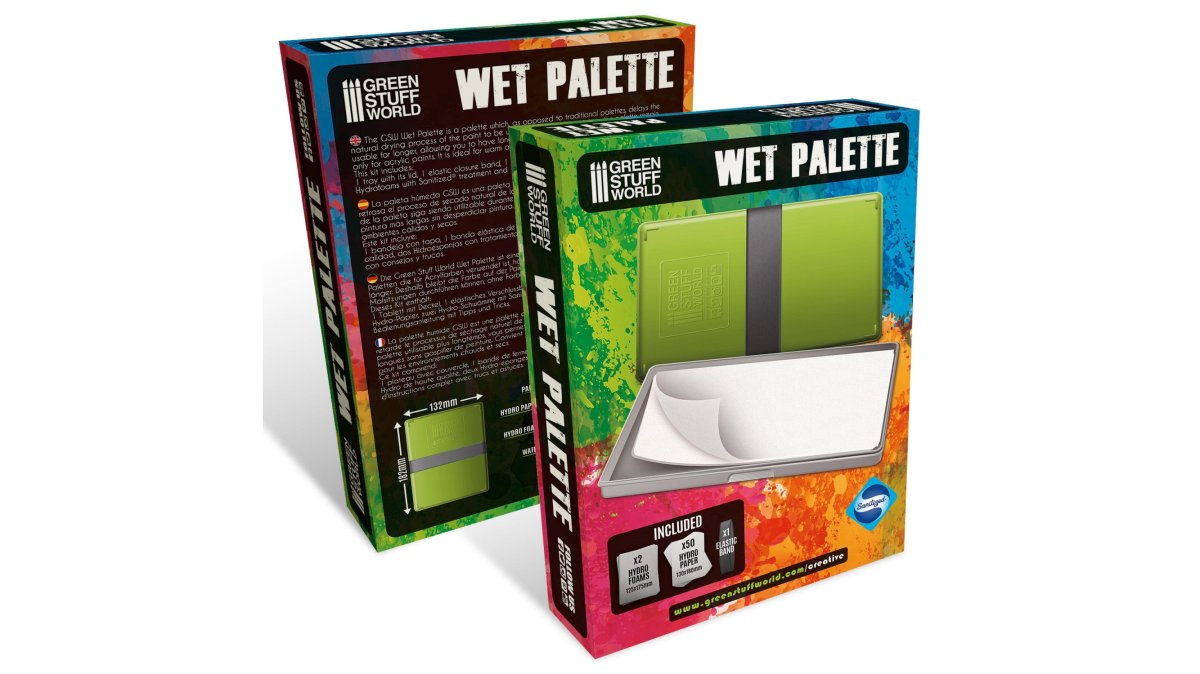
Green Stuff World Acrylic Wet Palette →
How to Use a Wet Palette for Minis
A wet palette keeps acrylic paint workable for hours instead of minutes. You place a permeable paper over a damp sponge, load paint onto the paper, and the moisture wicks upward to stop the paint drying out. It's the cheapest upgrade to your painting quality.
The practical payoff is thinning.
Wet palette technique overview from a hobby painting reference
Assembly Tools: Hobby Knives, Clippers, and Glue
Assembly tools are where beginners cut corners and regret it. You need sprue cutters to remove parts from the frame, a hobby knife to clean up, and glue to join. Buying all three costs less than a mid-range paint set and prevents the two most common beginner mistakes: torn plastic and glue-fogged surfaces.
Cleaning Mold Lines Without Damaging Detail
Mold lines are the raised seams left by the casting process. Scrape them with the back edge of a hobby knife blade, held at a shallow angle, or use a hobby file for flat surfaces. The goal is to remove the line without flattening the detail beside it.
Paints, Washes, and Metallics: Building a Working Palette
A working palette beats a large one. Start with a primer, a base color for each major area of your army, a wash, and one or two metallics. You can paint a complete, table-ready figure with fewer than ten pots. Water-based acrylics are the standard because they thin with water, clean up easily, and work with both brush and airbrush.

Here's a starter set that covers most projects:
- One grey primer
- A core of base colors: skin, cloth, armor, leather
- One dark wash for shading recesses
- One or two metallics for weapons and trim
- A matte varnish for protection
Budget vs. Premium: Where Your Money Actually Matters
Spend on primer, brushes, and a wet palette. Save on paints and tools. That's the short version.
| Category | Where to Spend | Where to Save |
|---|---|---|
| Primer | Water-based, brush-on | Skip spray cans until you have space |
| Brushes | Two quality synthetics | Skip full sets and sable at first |
| Palette | Wet palette | Skip ceramic and glass mixing trays |
| Paints | Core colors only | Skip full ranges and duplicate tones |
| Tools | Clippers and hobby knife | Skip motorized tools until you need them |
Tool Maintenance, Ergonomics, and Safety for Long Sessions
Maintenance and safety are the two topics most guides skip, and they're the ones that decide whether you're still painting in a year. Brushes, knives, and clippers all degrade faster with neglect than with use. Posture and ventilation matter more than most beginners expect.
For long sessions, the practical fixes are cheap:
- Sit with your work at chest height, not on your lap
- Use a lamp that lights the model without glare
- Take a break every 45 minutes to reset your grip
- Ventilate the room when using spray primer or solvent-based products
- Keep a small bin for blade and sprue waste
Frequently Asked Questions
What are the essential tools for painting tabletop minis?
You need five core categories: a primer to help paint adhere, a set of brushes (a size 0 and size 2 round cover most work), acrylic paints plus a wash for shading, a wet palette to keep paint workable, and assembly tools like sprue cutters, a hobby knife, and cyanoacrylate glue. A magnifying lamp and brush soap round out a practical starter kit without overspending.
What are the best miniature paint brushes for beginners?
Start with synthetic brushes in sizes 0, 1, and 2. Synthetic bristles hold a point well, cost less, and tolerate the mistakes that ruin a first brush. Add one sable brush later for fine detail work once your technique improves. Avoid buying a 10-brush set; three good brushes you actually use beat ten you never touch.
Do I need a wet palette for miniature painting?
A wet palette is the single biggest quality-of-life upgrade for acrylic painting. It keeps paint workable for hours instead of minutes, which matters for layering, glazing, and color transitions. The Green Stuff World Acrylic Wet Palette at $15.99 gives you a controlled mixing surface and cuts wasted paint during long sessions. It is not mandatory, but most painters never go back.
How do I choose the right primer for tabletop miniatures?
Match the primer color to your paint scheme. Grey is the safest all-around choice because it shows both shadows and highlights. White makes bright colors pop, while black hides mistakes in recesses and suits dark armor. A water-based matt primer like Green Stuff World Matt Surface Primer in 60ml ($8.99) works with both brush and airbrush application and gives acrylics an even surface to grip.
What is the difference between hobby knives and clippers for minis?
Sprue cutters remove the miniature from the frame; a hobby knife handles cleanup. Clippers make the first cut, leaving a small nub of plastic. The hobby knife then shaves that nub flush and scrapes mold lines off flat surfaces. Using clippers for cleanup risks crushing thin parts, and using a knife to cut from the sprue puts unnecessary stress on the blade.
How often should I clean my brushes and other tools?
Clean brushes after every session with brush soap. Green Stuff World Brush Soap ($3.99) removes acrylic residue and conditions bristles so fine points keep working. Wipe clipper blades and knife edges dry to prevent rust, and replace blades when they start tearing plastic instead of slicing it. A two-minute cleanup routine extends tool life by months.