
Best Hobby Paint Alternatives to Miniature Market
Table of Contents
- Why Miniature Painters Switch to Alternative Retailers
- Best Paints for Miniatures: What to Look For
- Acrylic Paint for Miniatures: Craft vs. Professional Grade
- Vallejo vs Citadel Paint: A Practical Comparison
- Essential Miniature Painting Supplies Beyond Paint
- Where to Buy: Comparing Retailers by Cost and Availability
- Green Stuff World Paints: A Specialized Alternative
- Frequently Asked Questions
Last Updated: October 16, 2026
Why Miniature Painters Switch to Alternative Retailers
Finding the right place to buy hobby paints shapes your creative process. When sourcing miniature paint alternatives, you're really asking: where can I get quality supplies at a fair price with reliable stock and reasonable shipping?
Many painters start at big-box hobby retailers, then discover they're paying a premium for convenience rather than value.
At Pewgilist, we've watched this shift repeatedly. Painters switch because they find better ranges, faster shipping, or retailers that understand miniature painting rather than treating it as generic craft.
Best Paints for Miniatures: What to Look For
The right miniature paint applies smoothly, covers consistently, and holds its pigment without chalking or separating. Not every acrylic designed for miniatures delivers on all three.
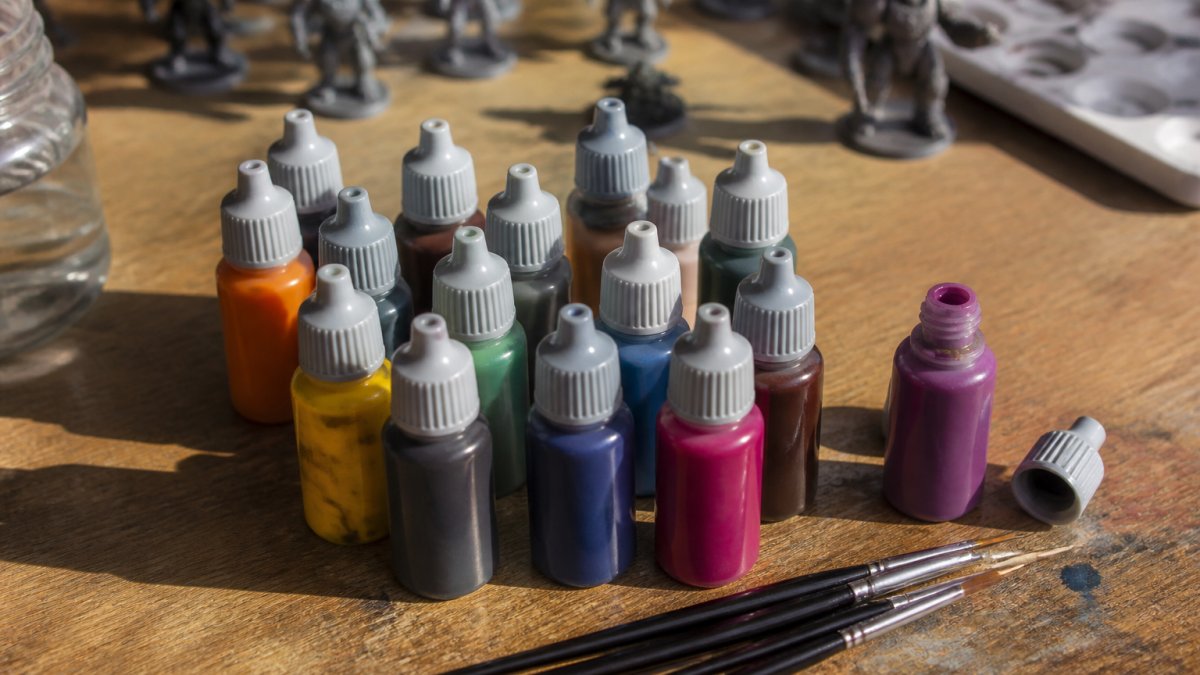
Coverage and Opacity Standards
Coverage matters more than most guides admit. A paint needing three coats to hide primer costs you time and material; genuine opacity covers in one or two thin coats, so basecoats move faster and layers build cleaner.
Opacity is about pigment density, not thickness. High-quality miniature paints pack more pigment per milliliter, so you don't thin them to useless transparency just to get flow.
Pigment Quality and Consistency
Pigments determine longevity and how color behaves under different lighting. Cheap acrylics use fillers that turn chalky and crack when dry; professional-grade miniature paints use pure pigments that stay flexible and color-stable for years.
Consistency matters equally. Too thick clogs your brush and overworks details; too thin separates in the bottle and needs constant re-thinning. The sweet spot flows smoothly without additives but keeps enough body to cover evenly.
Acrylic Paint for Miniatures: Craft vs. Professional Grade
Craft acrylics from general art stores are cheaper upfront, but they're thinner, less pigmented, and formulated for broad canvas coverage rather than fine detail work.
Professional-grade acrylics cost more per bottle but are engineered for miniatures: better pigment load, superior flow, and formulations that don't separate or dry chalky.
The gap becomes obvious after one session. Craft paint needs thinning, multiple coats, and constant brush-cleaning; professional paint applies in thin, even layers and holds detail without clogging.
Vallejo vs Citadel Paint: A Practical Comparison
These two dominate miniature painting for good reason: both deliver consistent quality and broad color ranges. The choice often comes down to availability and preference, but the practical differences matter more than most comparisons admit.
Consistency and Workflow
Vallejo Model Color flows smoothly and thinly straight from the bottle, so many painters prefer it for layering. Citadel paints run thicker and come in distinctive pots some love and others find awkward.
Neither is objectively superior, it's about workflow. For fine detail and layering, Vallejo's thinner consistency saves prep time. If you prefer thicker paint and don't mind thinning, Citadel's range and availability may win out.
Color Matching Across Ranges
The most useful thing a comparison can give you is a substitution map, what to buy from one brand when the other's color is unavailable or discontinued. Exact matches are rare because pigment formulations differ, but close functional equivalents exist. A few commonly cited pairings:
| Citadel Color | Closest Vallejo Equivalent | Notes |
|---|---|---|
| Abaddon Black | Model Color 70.950 Black | Near-identical; Vallejo slightly thinner |
| Mephiston Red | Model Color 70.909 Vermillion | Vallejo is warmer; test on a swatch first |
| Macragge Blue | Model Color 70.930 Dark Blue | Close match; Vallejo covers in fewer coats |
| Leadbelcher | Model Air 71.072 Gunmetal | Vallejo metallic is finer-grained |
| Rhinox Hide | Model Color 70.941 Burnt Umber | Vallejo is slightly more saturated |
Treat these as starting points, not guarantees. Always test on a primed swatch before committing a full miniature, because the same nominal color can read differently under your lighting and over your primer.
Pot vs. Dropper Bottle
This is a workflow decision, not a quality one. Citadel's pots require dipping a brush into the reservoir, risking contamination and evaporation. Vallejo's droppers dispense exact amounts onto a palette, making thinning and mixing more predictable and reducing waste.
Long sessions favor droppers; short bursts and the tactile feel of a pot favor Citadel, just keep the lid sealed between uses.
Where Both Brands Fall Short
Both Vallejo and Citadel are generalist ranges that skip specialty effects like wash inks, fluorescent pigments, and color-shifting finishes. Green Stuff World fills that gap with wash inks, fluorescent acrylics, metallic finishes, and color-shifting paints that standard lines can't match.

| Paint Brand | Consistency | Best For | Color Range |
|---|---|---|---|
| Vallejo | Thin, flows smoothly | Layering and detail work | Extensive, organized by type |
| Citadel | Medium, thicker | Base coating and coverage | Broad, tied to Warhammer ranges |
| Green Stuff World | Varies by type | Specialty effects and miniatures | Growing, includes wash inks |
Practical Buying Advice
- If you're starting fresh: pick one brand and build a core palette of 10-12 colors rather than mixing brands immediately. Consistency in formulation makes early learning easier.
- If you're filling gaps: use the substitution table above, then verify with a swatch.
- If you need a specific effect: neither brand is the answer. Look at specialty ranges for washes, fluorescents, and metallics.
Essential Miniature Painting Supplies Beyond Paint
Paint alone doesn't complete your setup. Quality brushes, thinning medium, and palette space aren't optional, they're force multipliers that make your paint perform better.
Green Stuff World Acrylic Color Paint – 17ml →
A good brush holds its shape and doesn't shed bristles; cheap brushes do both. Quality brushes cost more upfront but last hundreds of miniatures.
A wet palette, even a ceramic tile with a damp paper towel, prevents paint from drying out and lets you work at your own pace.
Where to Buy: Comparing Retailers by Cost and Availability
The retailer you choose affects your per-bottle cost and how fast you can restock mid-project. Most guides stop at "compare prices," but what actually determines cost is the total delivered cost of your specific order, not the sticker price on one bottle.
How to Calculate Total Delivered Cost
Use this formula for any order:
Total delivered cost = (item price × quantity) + shipping − free-shipping threshold savings + sales tax
Then divide by the number of bottles to get your true per-bottle cost. A few worked examples show why the sticker price misleads:
| Scenario | Item Price | Shipping | Order Size | True Per-Bottle Cost |
|---|---|---|---|---|
| Retailer A | $4.49/bottle | Free over $50 | 12 bottles ($53.88) | $4.49 |
| Retailer B | $3.99/bottle | $8 flat | 12 bottles ($47.88 + $8) | $4.66 |
| Retailer C | $4.25/bottle | Free over $35 | 8 bottles ($34.00 + $6) | $5.00 |
| Retailer D | $4.49/bottle | Free over $50 | 6 bottles ($26.94 + $7.95) | $5.82 |
Notice that Retailer B has the lowest sticker price but loses on a 12-bottle order. Retailer D looks competitive until you order below its free-shipping threshold. The cheapest retailer changes depending on how many bottles you buy. That's the single most useful thing to understand before you commit to a store.
The Four Variables That Actually Matter
- Free-shipping threshold. A $50 threshold rewards larger orders; a $35 threshold is friendlier to small restocks. If you typically buy 4-6 bottles at a time, a lower threshold usually wins even if per-bottle pricing is slightly higher.
- Flat-rate vs. calculated shipping. Flat rates favor small orders; calculated rates favor large ones. If a retailer charges by weight, a 12-bottle order can cost more to ship than the paint itself.
- Sales tax nexus. Online retailers collect sales tax in states where they have economic nexus, which now includes most states following the South Dakota v. Wayfair (2018) decision. Two retailers with identical pricing can differ by 6-10% at checkout depending on whether they collect tax in your state.
- Stock reliability. Look for real-time inventory counts, not "usually ships in" language.
Local Purchasing: How to Check Stock Before You Drive
Local game stores and art suppliers offer immediate gratification, you walk out with paint today. That convenience costs money, but it also saves shipping and eliminates delivery wait. Before making the trip:
- Call ahead or check the store's online inventory. Many independent game stores now publish live stock counts on their websites or via a store app.
- Ask about specific SKUs, not brands. "Do you have Vallejo Model Color 70.950 Black?" gets a useful answer. "Do you carry Vallejo?" does not.
- Check the store's restock day. Most independents restock on a fixed weekly schedule; buying the day after restock gives you the best selection.
Specialty vs. Generalist Retailers
Generalist craft retailers stock a wide catalog but often carry only top-selling colors from each brand. Specialty retailers curate the brands and SKUs that matter to miniature painters, so the specific colors you need are actually available rather than diluted across generic craft supplies.
When comparing stores, weight depth of range as heavily as price. A retailer stocking 40 colors from one brand beats one stocking 6 colors each from 20 brands.
Green Stuff World Paints: A Specialized Alternative
Green Stuff World fills gaps mainstream brands don't address, with wash inks, fluorescent acrylics, metallic finishes, and color-shifting paints that standard lines can't match.

The Green Stuff World Acrylic Color Paint - 17ml ($4.49) delivers the core functionality you need: high-quality water-based acrylic in a 17ml bottle with controlled dispensing, suitable for brush or airbrush application.
Beyond that foundation, their specialty paints expand what's possible. The Green Stuff World Wash Ink - 17ml ($4.99) flows into recesses to add shadow and depth in a single pass, something you'd need multiple layers and careful brush control to achieve with standard paint. The Green Stuff World Fluorescent Paint - 17ml ($4.49) creates glowing effects that standard acrylics can't match, applied over white or light bases for maximum intensity.

For painters who want metallic finishes with real reflectivity, the Green Stuff World Metallic Paint - 17ml ($5.50) delivers crisp, reflective metal effects on weapons, armor, and trim. The Green Stuff World Chameleon Colorshift Paint - 17ml ($5.99) shifts color as light and viewing angle change, a visual effect that makes miniatures stand out on the table.
The real miniature paint alternatives aren't about finding cheaper paint, they're about finding retailers and brands that understand what miniature painters actually need.
Frequently Asked Questions
What are the best paints for miniatures if I'm just starting out?
Start with high-quality acrylic paint for miniatures that offers good coverage and smooth consistency. Water-based acrylics like those from Green Stuff World ($4.49-$5.99 per bottle) work well for beginners because they're easy to thin, dry quickly, and don't require special equipment. Avoid craft paints from general art stores, they're often too thick and have inconsistent pigment, which makes detail work frustrating. Look for paints labeled specifically for miniatures or models; they're formulated for the thin coats and fine brushwork miniature painting demands.
Is acrylic paint for miniatures better than craft acrylic paint?
Yes. Acrylic paint for miniatures is engineered with finer pigments, better flow, and thinner consistency than craft acrylics. Craft paints are designed for larger surfaces and thicker application, so they often feel chalky or gummy on small details. Professional miniature paints have superior opacity, which means you need fewer coats to achieve solid color coverage. They also thin more smoothly without losing pigment, making layering and glazing, essential techniques in miniature painting, much more reliable.
How do I know if a miniature paint retailer has good stock and fast shipping?
Check retailer websites for shipping estimates before ordering. Compare total delivered cost, not just paint price, shipping fees and delivery time vary significantly. Local game stores and art suppliers often have miniature paints in stock for immediate pickup, which saves on shipping and lets you inspect paint consistency before buying. Online retailers that specialize in hobby supplies typically maintain better stock than general craft retailers.
What makes Vallejo vs Citadel paint different for miniature painting?
Both Vallejo and Citadel are professional-grade miniature paints, but they differ in consistency and coverage. Vallejo paints tend to have a thinner, more fluid consistency straight from the bottle, making them easier to thin for glazing and layering. Citadel paints are slightly thicker and often provide better opacity with fewer coats. Choice between them depends on your painting style, Vallejo suits painters who prefer multiple thin layers, while Citadel works well for those who want faster coverage. Both are reliable alternatives to generic craft paints and offer extensive color ranges.
What miniature painting supplies do I need besides paint?
Beyond paint, you'll need quality brushes (sizes 0, 1, and 2 for detail work), a palette for mixing, water cups for rinsing, and paint thinner or medium for thinning coats. A wet palette keeps mixed paint usable longer. Wash inks like Green Stuff World Wash Ink ($4.99) add shadows and definition in recesses without extra brushwork. Specialty paints, metallics, fluorescents, or colorshift options, expand your creative range. Primer is essential for proper paint adhesion. Start with basics, then add specialty supplies as your skills develop.