
Is Using Standard Acrylics on 3D Printed Parts Worth It?
Quick Summary
Standard acrylics on 3D printed parts are a practical, inexpensive choice for display pieces, tabletop figures, and decorative work. For parts that take heavy handling or need a long-lasting finish, add primer and a clear sealer, or choose a different paint system.
- Wash the print in warm, soapy water to remove handling oils before painting.
- Sand from 220 grit to 400 grit to reduce visible layer lines.
- Apply two or three thin coats rather than one heavy coat.
- Use a primer so the paint grips PLA more reliably.
- Seal the finished paint with a clear coat to improve durability.
Table of Contents
- Standard Acrylics on 3D Prints: What You Can Expect
- Preparing a Print Before Painting: Cleaning, Sanding, and Dust Removal
- Does Acrylic Paint Stick to PLA Without Primer?
- Choosing a Primer and Paint Set: Green Stuff World vs Standard Craft Acrylics
- Cost, Finish, and Durability: Standard Acrylics vs Enamel, Lacquer, and Spray Paint
- How to Paint PLA with Acrylic, Step by Step
- Sealing Acrylic Paint on a 3D Print and Deciding If It Is Worth It for Your Project
- Frequently Asked Questions
Standard acrylics on 3D printed parts can work well, but whether they are worth it depends on the material, the preparation, and how much finish quality matters to your project. Makers often ask this question, usually after a first attempt left chipped or chalky results. This guide walks through what to expect, how to prepare a print, and when a simple acrylic finish makes sense.
Short answer: For display pieces, tabletop figures, and casual decorative work, standard acrylics are a practical and inexpensive choice. For parts that take heavy handling or need a long-lasting finish, you will want primer, a sealer, or a different paint system.
Standard Acrylics on 3D Prints: What You Can Expect
Acrylic paint adheres to most common 3D print materials, but adhesion is not the same as durability. PLA is the most forgiving surface to paint, while smooth resin and some engineering plastics can repel water-based paint unless they are prepared first.
Expect these outcomes with standard acrylics:
- Good coverage on light colors once you apply two or three thin coats
- Visible layer lines unless you sand or fill the print first
- Moderate durability that improves with a clear sealer
- Lower cost per project compared with spray paint or enamel
Disappointing results often come from skipping preparation, not from the paint itself. A thin coat over a dusty, greasy print will flake no matter how good the acrylic is.
Preparing a Print Before Painting: Cleaning, Sanding, and Dust Removal
Preparation takes the most time and makes the biggest difference. Work through these steps before you open a bottle of paint.
- Remove supports and trim stringing with a hobby knife.
- Wash the print in warm, soapy water to remove oils from handling, then dry it fully.
- Sanding for layer lines: Start around 220 grit and move to 400 grit. Sand gently to avoid rounding fine details.
- Brush off dust with a soft brush or blow it off with compressed air before priming.
Watch out: Skipping the wash step is the most common cause of paint peeling off a print. Fingerprint oils repel water-based paint even when the surface looks clean.
Does Acrylic Paint Stick to PLA Without Primer?
Yes, acrylic paint will stick to PLA without primer, but the bond is usually weaker. Paint applied directly to a smooth PLA surface can scratch off with a fingernail, especially on thin coats.
Primer gives the paint a consistent surface to grip. It also fills small layer lines and helps colors look even. If you skip primer, plan on two or three thin coats and a clear sealer afterward.
Choosing a Primer and Paint Set: Green Stuff World vs Standard Craft Acrylics
The paint you choose matters less than how it behaves on a 3D print. Standard craft acrylics and miniature-focused acrylics differ in pigment load, viscosity, coverage, and leveling, and those differences show up most on small features and layer lines.
Standard craft acrylics: high pigment volume but often thick out of the bottle, with a binder that can fill fine detail if applied heavily.
Miniature and airbrush acrylics: finer pigment dispersion, lower viscosity, and better leveling, so they hold detail and dry smoother. Coverage per coat is often better despite the smaller bottle, and the paint thins predictably for airbrush use.
Primer choice: a water-based matt primer gives acrylic a consistent surface to grip and fills minor layer lines.
| Option | Price (USD) | Best For | Finish Notes |
|---|---|---|---|
| Green Stuff World Matt Primer, 60ml | $8.99 | Priming PLA and resin before color | Even matt base |
| Green Stuff World Acrylic Color, 17ml | $4.49 | Basecoats and detail work | Controlled dispensing |
| Standard craft acrylics | Varies by store | Budget projects and decorative pieces | Can look thicker on small details |
Material-specific compatibility and failure risks:
- PLA: the most forgiving surface; water-based acrylic and matt primer adhere well after washing and light sanding.
- Resin (SLA/DLP): smooth and often slightly oily from release agent; wash and cure fully, then prime, or acrylic can bead and pull away.
- ABS and ASA: solvent-based primers and paints can soften or craze the surface; test on a scrap print first and prefer water-based systems.
- PETG: low surface energy makes adhesion inconsistent; sanding and a primer are close to mandatory.
- TPU and other flexible filaments: paint film cracks when the part flexes; a flexible primer and thin coats reduce flaking.
Watch out: solvent-based lacquers and some spray enamels can melt or etch ABS, polystyrene, and thin resin walls. Always test on a hidden area or a scrap print before committing to a full coat.
Cost, Finish, and Durability: Standard Acrylics vs Enamel, Lacquer, and Spray Paint
Whether standard acrylics are worth it depends on total cost, effort, durability, and finish compared with the alternatives. Here is how the main paint systems stack up on a 3D print.
| Paint system | Typical cost pattern | Durability on handled parts | Finish character | Effort and safety |
|---|---|---|---|---|
| Standard craft acrylic | Lowest per ounce; sold in large bottles | Moderate; chips on edges without sealer | Matte to satin; can look thick on fine detail | Water cleanup, low odor, thin with water |
| Miniature/airbrush acrylic | Higher per ounce but better pigment load | Moderate; improves with primer and clear coat | Smooth leveling, holds fine detail | Water cleanup, needs thinning and a wet palette |
| Spray paint (acrylic or enamel) | Mid; one can covers large area | Good on flat surfaces; can craze on some plastics | Even, fast, hard to control on small parts | Solvent fumes, needs ventilation and masking |
| Enamel | Mid to high | High wear and water resistance | Glossy, slow-curing, self-leveling | Solvent cleanup, long dry times |
| Lacquer | High | Highest solvent resistance and hardness | Very smooth, can melt some plastics | Strong fumes, respirator recommended |
The cost math that matters: a standard craft acrylic bottle costs a fraction of a miniature paint bottle per ounce, but craft paint often needs an extra coat or two to reach the same opacity, and it may need thinning to avoid filling detail. On a large, simple print the craft route wins on total cost.
Durability mechanism: acrylic is a water-based polymer film that sits on the surface rather than chemically bonding to PLA. It resists light handling but abrades at sharp edges and recesses where the film is thin. Enamel and lacquer form harder films and resist water and solvents better, but they can attack certain plastics and require ventilation.
Decision guidance by intended use:
- Display models and decor: standard acrylics plus primer and a clear sealer are the best value; the part is rarely handled, so wear is not the limiting factor.
- Frequently handled game pieces and props: primer, two to three thin acrylic coats, and a matte or satin clear coat; reapply sealer at wear points over time.
- Functional components and tools: acrylic is usually the wrong choice; abrasion and moisture will win. Consider enamel or a dedicated protective coating.
- Outdoor prints: standard acrylics fade and chalk under UV and moisture; a UV-resistant clear coat or a different coating system is the safer route.
Side-by-Side Test: Chipping and Scratch Resistance
A repeatable comparison is the clearest way to answer the worth-it question for your own prints. Use the same model, split into identical samples, and change one variable at a time:
- Sample A: bare PLA, acrylic only.
- Sample B: primed PLA, acrylic only.
- Sample C: primed PLA, acrylic plus clear sealer.
- Sample D: primed PLA, enamel or spray paint as a control.
Test each with a fingernail scratch across an edge, a coin rub on a flat face, a 24-hour water soak, and a week of pocket or handling wear. Score chipping, color shift, and gloss change. A sealed, primed sample can close much of the gap to an enamel control on light handling, while a bare sample tends to fail first at edges. Run the test on your own filament and paint brands, because adhesion varies by formulation and by print settings such as layer height and cooling.
How to Paint PLA with Acrylic, Step by Step
This process works for most PLA prints and keeps your acrylic workable throughout the session.
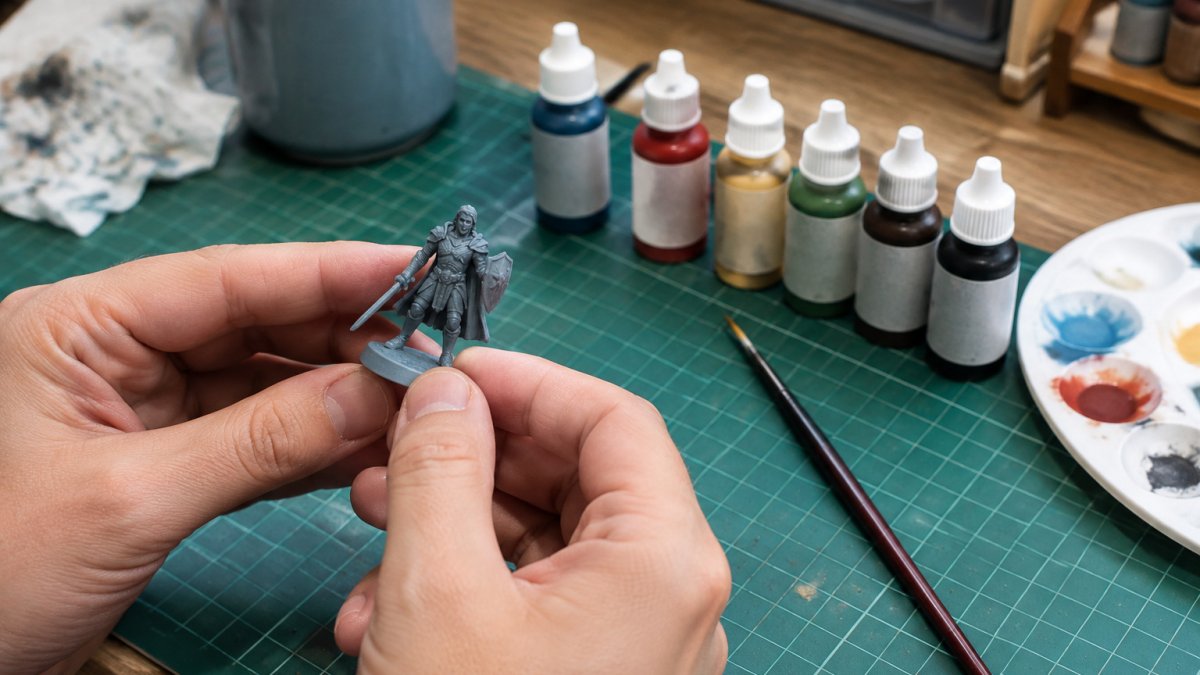
- Prepare the print by washing, drying, sanding, and dusting as described above.
- Apply a thin primer coat of the Green Stuff World Matt Surface Primer and let it dry fully.
- Set up a wet palette so the acrylic stays workable. A Green Stuff World Acrylic Wet Palette keeps paint moist between sessions.
- Apply thin basecoats with the Green Stuff World Acrylic Color Paint, using two or three thin coats rather than one heavy one.
- Add details and highlights with progressively smaller brushes.
- Seal the finish once the paint is fully dry.
Thin coats matter more than most beginners expect. Heavy coats pool in recesses, dry unevenly, and peel more easily.

Sealing Acrylic Paint on a 3D Print and Deciding If It Is Worth It for Your Project
A clear sealer is the step that most improves durability. Once the paint has cured, a clear coat protects it from handling, dust, and light scratches. Matt or gloss sealers both work; choose based on the finish you want.
To decide whether standard acrylics are worth it for your project, ask three questions:
- Will the print be handled often, or mostly displayed?
- Does fine detail matter more than speed?
- Are you willing to prime and seal, or do you need a finish with no extra steps?
If your answer leans toward display and detail, standard acrylics with primer and a sealer are a strong, affordable option. If the part will take rough use, a more durable paint system may serve you better.
For more guidance, our related guide on preventing chalky finish in miniature paints explains common causes and fixes. You can also read our best miniature paints for beginners guide if you are choosing your first set.
Frequently Asked Questions
Is acrylic paint good to use on 3D prints?
Yes, for most hobby projects. Standard acrylics bond well to 3D prints once the surface is cleaned, lightly sanded to soften layer lines, and primed. Without that preparation, paint can lift or rub off, especially on PLA parts that get handled often. Acrylics are water-based, cheap, and easy to thin, which makes them a practical choice for figures, terrain, and display pieces. For parts that will see heavy wear or heat, a sealed finish or a more durable paint system is the safer choice. Start with a test piece before painting a whole batch.
Can you use standard acrylic paint on PLA without primer?
You can, but results are less consistent. Bare PLA has a slightly smooth, sometimes waxy surface, and thin acrylic coats can chip or show layer lines. Several thin coats on unprimed PLA often look blotchy. A matt primer like Green Stuff World Matt Surface Primer ($8.99, 60ml) gives an even tooth for the paint and smooths the look of layer lines. Skipping primer saves a step and money, but expect more coats and more touch-ups over time.
How do you seal acrylic paint on a 3D print?
Once the paint is fully dry, which usually takes several hours to overnight depending on coat thickness, apply a clear protective topcoat in a thin, even layer. Matte or satin sealers reduce glare and hide minor texture, while gloss sealers add shine and some extra scratch resistance. Test any sealer on a scrap print first, since some clear coats can soften acrylic or cause frosting. Sealing is most worthwhile on parts that will be handled, transported, or used as game terrain.
How many coats of acrylic paint should you use on a 3D print?
Most projects look best with two to three thin coats of acrylic over a primed base. Thin coats dry faster, flow more evenly, and are less likely to fill in fine detail or leave ridges along layer lines. Let each coat dry fully before adding the next, and thin the paint with water if it goes on thick. Heavy single coats often look good at first but crack or peel more easily once the part is handled.
