
Silk PLA vs Regular PLA Strength: A Detailed Comparison
Table of Contents
- What Silk PLA Is and How It Differs from Regular PLA
- Regular PLA Tensile Strength and Mechanical Performance
- Silk PLA Layer Adhesion and Interlayer Bonding
- Silk PLA Printing Settings and Temperature Requirements
- PLA Infill and Wall Count for Strength
- Strength Comparison Table and Real-World Performance
- Which Filament Should You Choose for Your Project
- Frequently Asked Questions
Last Updated: October 17, 2026
What Silk PLA Is and How It Differs from Regular PLA
Silk PLA and regular PLA are both polylactic acid thermoplastics, but filament additives make them behave differently. Silk PLA contains compounds that create a glossy, smooth finish during extrusion; regular PLA produces a matte appearance. The formulation changes how light reflects off prints and how layers bond.
Silk PLA's additives affect how the material cools and solidifies, creating that reflective surface straight off the printer. Regular PLA has no such additives and finishes uniformly matte. At Pewgilist, this distinction matters because it shapes both print behavior and final part strength.
When comparing silk PLA vs regular PLA strength, the visual appeal of silk often comes with trade-offs in mechanical performance. Regular PLA tends to offer better layer adhesion and more consistent tensile strength, especially when printed at standard settings.
Regular PLA Tensile Strength and Mechanical Performance
Regular PLA delivers predictable mechanical strength when printed correctly. Its baseline tensile strength stays consistent across batches and brands, making it the reliable choice for functional parts.
Layer adhesion in regular PLA is typically stronger than in silk variants because no additives interfere with molecular bonding between layers. Parts resist peeling and delamination better under stress, which is why regular PLA suits brackets, hinges, and load-bearing components.
Regular PLA is also more forgiving to print: standard temperatures work reliably and extrusion is predictable at conventional speeds. At Pewgilist, we stock ELEGOO PLA Filament in black for exactly this reason, it's the workhorse material for everyday maker projects.

Silk PLA Layer Adhesion and Interlayer Bonding
Layer adhesion is where the silk PLA vs regular PLA strength conversation gets decided. Silk PLA's glossy additives are typically elastomeric or wax-like compounds that bloom toward the surface during extrusion, producing the sheen but leaving a thin film of lower-strength material at layer boundaries.
The practical consequence: silk PLA parts are strongest in the XY plane and weakest along the Z-axis.
Interlayer bonding in silk PLA is more sensitive to thermal history. Three variables dominate:
- Nozzle temperature. Silk PLA generally needs to run at the upper end of its range (often 200-220°C depending on the formulation) so the incoming layer has enough heat to partially remelt the layer below. Running cold produces poor fusion and a dull, weak part.
- Part cooling. Aggressive layer cooling freezes each road before it can bond. Many practitioners reduce fan speed for silk PLA, especially on small parts, and accept slightly softer overhangs in exchange for stronger bonds.
- Print speed and layer time. Very short layer times (small parts, thin layers) mean the previous layer is still hot and the new layer can weld well; very long layer times mean the previous layer is fully cold and bonding relies almost entirely on conduction from the new bead. Slowing down helps, but only up to the point where the nozzle is dwelling and cooking the additives.
To evaluate a spool before a long print, print a small Z-tension test bar (a vertical rectangle with a hole at each end) in both materials at the same settings, then pull them apart by hand or with a spring scale.
For maximum interlayer strength, regular PLA remains the safer default. If you want the silk finish on a stressed part, orient it so the main load runs in the XY plane, raise nozzle temperature within the manufacturer's range, reduce part cooling, and add perimeters so the load path stays inside the walls.
Silk PLA Printing Settings and Temperature Requirements
Silk PLA printing temperature typically ranges from 195°C to 210°C, varying by brand and formulation. Regular PLA prints well between 190°C and 210°C, a wider window. Silk PLA's narrower range means running a temperature tower to find your sweet spot before a full print.
Nozzle temperature directly affects finish quality. Too cold and the additives don't distribute evenly, creating a patchy or dull surface; too hot and they degrade, losing the shine. Silk PLA needs more calibration because the visual result depends on hitting the right temperature, not just a usable print.
Print silk PLA slower than regular PLA: most makers see good results at 30-40 mm/s for silk versus 50-60 mm/s for regular. Slower speeds let the material cool uniformly and layers bond properly; rushing sacrifices both strength and finish.
PLA Infill and Wall Count for Strength
Infill density affects strength in both materials, but more so in silk PLA due to weaker layer adhesion. A silk PLA part at 15% infill is noticeably more fragile than the same design in regular PLA.
Wall thickness matters for both materials. Most printers default to 1.2 mm walls, about 3-4 perimeters depending on nozzle size. For load-bearing silk PLA parts, increase walls to 2-3 mm or add perimeters; regular PLA is more forgiving, with 3-4 perimeters typically sufficient even for moderately stressed parts.
ELEGOO PLA Silk Filament 1 kg - Blue/Green →
Infill and wall count together determine how a part fails under load. Higher infill compensates for weak layer adhesion in silk PLA by distributing stress through more internal structure, and thicker walls reduce the distance stress travels through weak interlayer bonds. For functional silk PLA parts, treat both as critical variables.
Strength Comparison Table and Real-World Performance
Most comparisons of silk PLA vs regular PLA strength stop at "silk is weaker." That's directionally true but hides the variables that determine whether your part survives. The table below separates strength types and the settings that move each result. Treat the entries as relative tendencies to verify with your own test prints, not fixed constants.
| Characteristic | Regular PLA | Silk PLA | What Drives the Difference |
|---|---|---|---|
| In-layer (XY) tensile strength | High and consistent | Moderate to high, formulation-dependent | Base polymer vs. additive loading |
| Interlayer (Z) strength | Good | Noticeably lower | Additive film at layer boundaries |
| Flexural behavior | Bends and whitens before breaking | Often snaps at a layer line | Stress concentration at weak bonds |
| Impact resistance | Absorbs energy by deforming | Lower; sudden fracture is common | Brittle interlayer failure |
| Failure mode | Gradual, predictable | Sudden, direction-dependent | Layer adhesion vs. bulk strength |
| Sensitivity to print temperature | Wide acceptable window | Narrow window | Additives degrade or fail to fuse |
| Sensitivity to part cooling | Moderate | High | Cooling freezes bonds before they form |
| Best loading direction | Any | XY plane preferred | Z-axis is the weak axis |
How Print Settings Change the Comparison
Filament type is only one variable. The same silk PLA can behave very differently depending on how it's printed. The settings that matter most for strength are:
- Nozzle temperature. Running silk PLA toward the top of its range improves fusion; running it cold produces weak, dull parts. Regular PLA is more forgiving across its range.
- Part cooling. Reducing fan speed on silk PLA improves interlayer bonding at the cost of overhang quality. Regular PLA tolerates full cooling better.
- Layer height. Thicker layers mean fewer boundaries but each boundary carries more load. Thinner layers distribute stress across more interfaces. Either way, silk PLA benefits more from tuning this than regular PLA.
- Wall count and infill. More perimeters move load into continuous XY paths and away from weak Z bonds. Higher infill helps, but walls usually contribute more strength per gram of filament.
- Print orientation. The single biggest lever. A silk PLA part oriented so its main load runs in the XY plane can outperform a poorly oriented regular PLA part.
- Print speed. Slower speeds give layers more time to bond, which matters more for silk PLA than for regular PLA.
A Repeatable Test You Can Run at Home
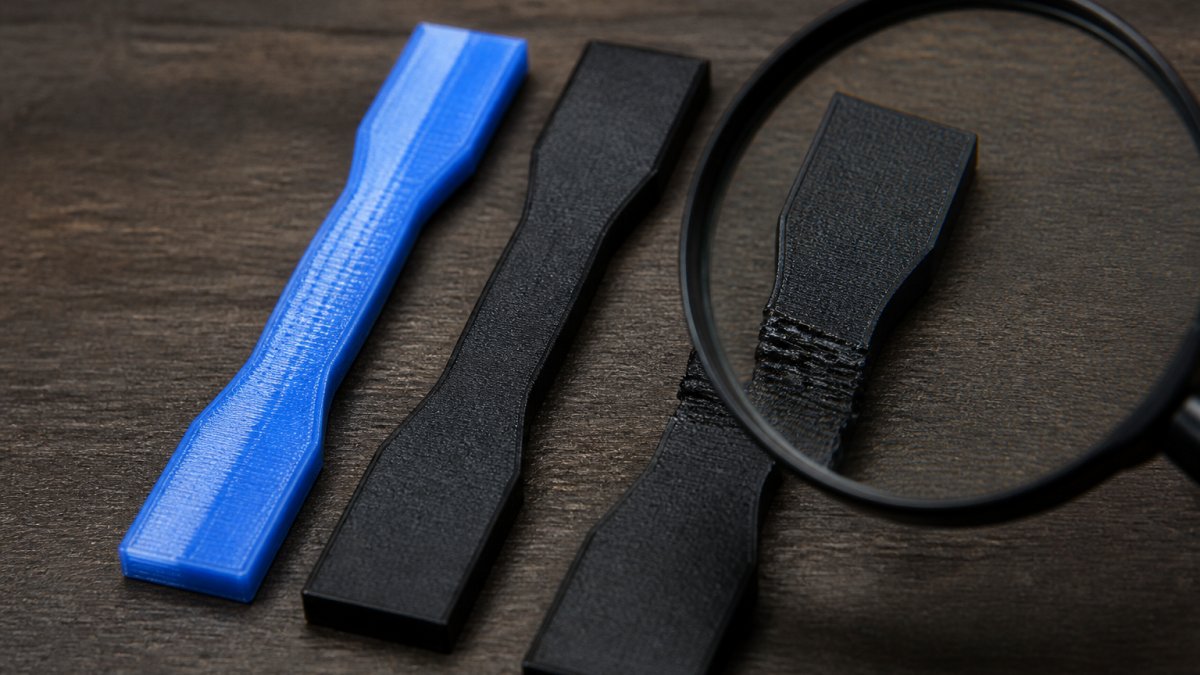
Because published tensile and impact data for hobby filaments is scarce and inconsistent, the most credible comparison is one you run yourself. A simple, repeatable protocol:
- Print the same small test bar (for example, a 60 mm x 10 mm x 4 mm rectangle with a 3 mm hole at each end) in both materials at identical settings.
- Print a second set at the settings you would actually use for each material (for example, hotter and slower for silk).
- Pull each bar apart with a spring scale or hang known weights from one end until it fails.
- Record the failure load, the failure location (layer line vs. mid-layer), and the failure mode (clean snap vs. stretched break).
Run three bars per material and average the results. You get a defensible, spool-specific answer instead of a generic claim, in under an hour of printing.
Which Filament Should You Choose for Your Project
The choice between silk PLA and regular PLA depends on whether your part is decorative or functional. If it needs to work, use regular PLA. If it needs to look good, consider silk PLA, but understand the strength limitations.
Decorative and Display Projects
Silk PLA excels for models, statues, trophies, gaming pieces, and display items; the glossy finish creates visual impact regular PLA can't match. The ELEGOO PLA Silk Filament collection at Pewgilist includes color-shifting options like Blue/Green and Blue/Purple that showcase the material on curved surfaces and detailed models. For fantasy miniatures, dragons, cosplay armor, and presentation pieces, silk PLA is the obvious choice.
Weak layer adhesion doesn't matter for static display pieces that sit on a shelf and never experience stress. Print in silk PLA, enjoy the finish, and don't worry about durability; layer separation only matters when parts move or bear load.
Functional and Load-Bearing Parts
Functional parts, brackets, hinges, fasteners, enclosures, and fixtures demand regular PLA. Consistent tensile strength and reliable layer adhesion make it the material you can trust for parts that actually do something. ELEGOO PLA Filament in black handles everyday maker projects reliably and suits anything structural.

If you must use silk PLA for a functional part, increase infill to 25-30%, add wall thickness, and avoid high-stress orientations. Even then, you're working against the material's inherent weakness; regular PLA is the better choice for anything that matters mechanically.
The decision comes down to one question: does this part need to look amazing, or work reliably? For decorative projects, silk PLA delivers a glossy, polished appearance straight off the printer. Explore our selection of ELEGOO PLA Silk Filament in multiple colors and standard ELEGOO PLA Filament to match your project needs.
Frequently Asked Questions
Is silk PLA weaker than regular PLA?
Silk PLA typically exhibits lower tensile strength than regular PLA due to filament additives that create its glossy finish. Regular PLA generally maintains stronger layer adhesion and better mechanical performance under stress. However, the difference depends heavily on print settings, infill density, and wall thickness. For decorative prints, silk PLA performs adequately. For functional or load-bearing parts, regular PLA is the safer choice.
How can you improve the strength of a silk PLA print?
Optimize print settings by increasing nozzle temperature 5-10°C above standard recommendations, reducing print speed to 30-40 mm/s for better layer bonding, and increasing infill to 15-20% minimum. Use 3-4 wall layers instead of 2. Orient your part to avoid stress along layer lines. Slower cooling also helps. Test with a temperature tower to find your filament's optimal range, then validate strength with a test specimen before printing your final part.
Can you use silk PLA for functional parts?
Silk PLA can be used for light-duty functional parts, but regular PLA is preferred for anything bearing significant stress or impact. Silk PLA works for display brackets, decorative enclosures, or parts that are handled gently. If your part must withstand load, vibration, or repeated stress, regular PLA with proper infill and wall settings is the better option. Always test your specific design before committing to a full print.
What is the main difference between silk PLA printing settings and regular PLA settings?
Silk PLA requires 5-10°C higher nozzle temperature than regular PLA (typically 210-220°C vs 200-210°C) to flow smoothly and develop its glossy finish. Print speed should be 10-20% slower for silk PLA to ensure consistent layer adhesion. Regular PLA tolerates faster speeds and lower temperatures. Both benefit from heated beds, but silk PLA is more sensitive to cooling speed, so chamber temperature control helps preserve the glossy appearance.